Modeling how the immune system learns, remembers and adapts over time.
MuneSpike is developing an Adaptive Immune Memory Engine that integrates T-cell memory, B-cell memory, cytokine dynamics and Digital Twin modeling to simulate long-term immune behavior.
Instead of only analyzing static biomarkers, the platform aims to model how the immune system remembers previous exposures, adapts to inflammatory signals and predicts future immune responses.
Emerging studies further demonstrate how specific epitopes, HLA profiles and adaptive T-cell memory contribute to chronic inflammation, autoimmunity and disease progression.
The framework explores:
- T-cell memory and immune exhaustion
- B-cell memory and antibody durability
- Cytokine signaling dynamics
- Immune rebound detection
- Tumor and chronic inflammation immune escape
- Personalized Digital Twin prediction
MuneSpike combines adaptive immunology with AI-driven simulation layers to support next-generation immune monitoring, therapeutic modeling and precision medicine research.
Recent advances in conformational epitope vaccines and structural immunology further support the importance of dynamic immune recognition in neurodegenerative and chronic inflammatory diseases.
Recent studies suggest that adaptive immune memory continuously diversifies over time, including the emergence of memory B cells recognizing subdominant epitopes that may contribute to broader and more resilient immune responses.
Conceptual Research Framework — In Development
Explore Adaptive Immune Modeling
Emerging research demonstrates that T-cell metabolic fitness, immune persistence and adaptive memory dynamics may critically influence therapeutic durability and response in solid tumours.
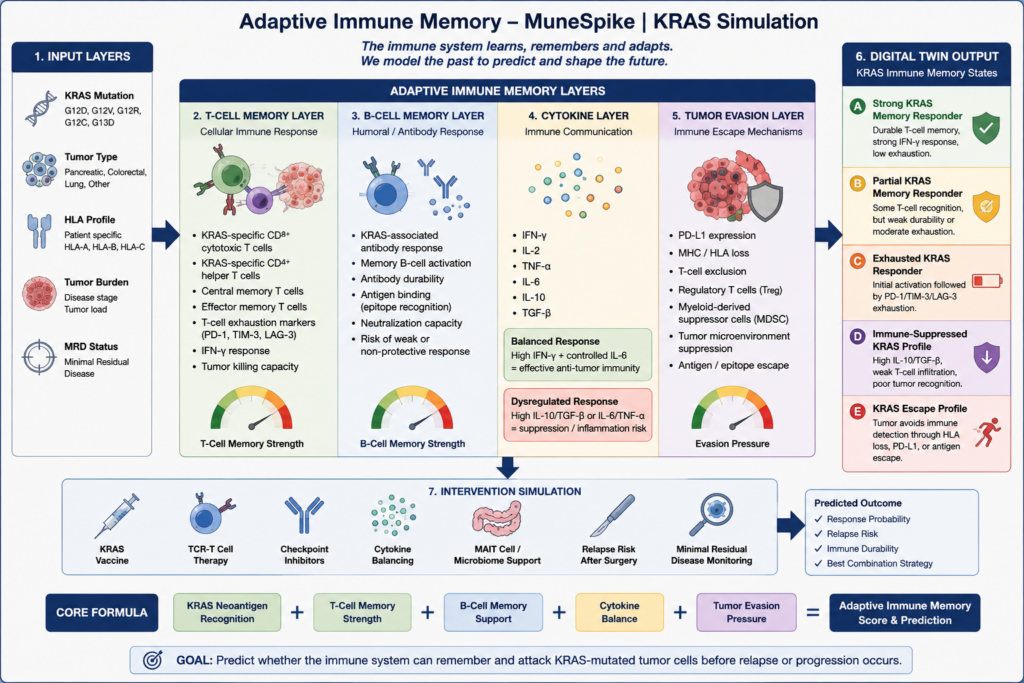
“MuneSpike explores how adaptive immune memory can be modeled to predict long-term immune behavior, relapse risk and therapeutic response.”
Disposable Tissue Test — Example Data Layer
MuneSpike explores a low-cost disposable tissue-based nasal test to capture immune and inflammatory signals after a simple sniff or nasal contact event.
Example timeline:
0h — baseline nasal immune state
1h — early mucosal response
10h — delayed inflammatory or immune activation
24h — recovery, persistence or rebound signal
Potential data from one sniff/tissue test:
- nasal cytokine signals: IL-6, TNF-α, IFN-γ
- mucosal immune activation
- viral or antigen exposure indicators
- epithelial barrier stress
- microbiome-related signals
- inflammatory rebound pattern
- recovery speed
- Digital Twin immune response score
Purpose:
The disposable tissue test could become a simple input layer for the MuneSpike Digital Twin, helping simulate how the immune system responds over time after exposure, infection risk or inflammatory activation.
Emerging studies demonstrate that conserved epitopes can induce broad and cross-reactive adaptive immune responses, supporting the importance of dynamic epitope tracking and longitudinal immune memory modeling.
Emerging studies further demonstrate that dominant T-cell immune responses may arise from conserved non-dominant epitopes and mucosal immune compartments, supporting the importance of dynamic longitudinal epitope tracking.
Status:
Conceptual Research Framework — In Development